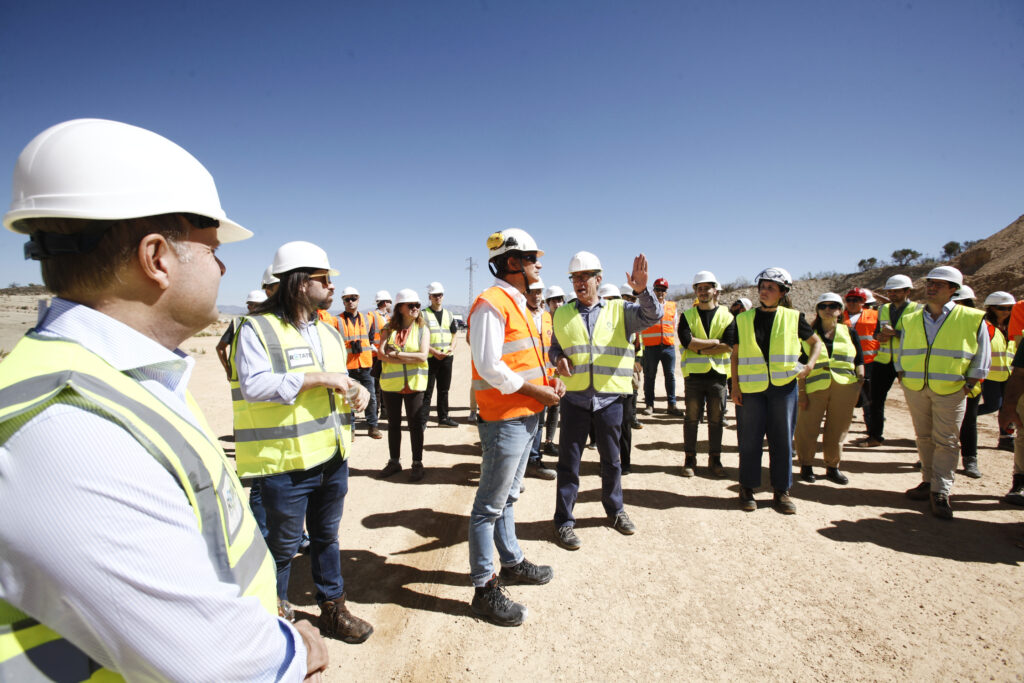
The Spanish Aggregates Association (ANEFA), coordinator of the European project Rotate under the Horizon programme, has held the Follower Projects Steering Committee (FPSC) 2026, a key meeting bringing together representatives from across the extractive industry to review progress and align strategies towards sustainable and circular mining.
The meeting was chaired by César Luaces, Director General of ANEFA and project coordinator, and highlighted the relevance of Rotate as “an essential project in today’s panorama”, addressing some of the most pressing challenges facing the sector, including emissions reduction, resource efficiency, circularity, and social engagement.
A strong European consortium
Rotate brings together 21 partners from 9 European countries, supported by an international advisory board and a panel of key stakeholders from the extractive industry. These bodies provide strategic guidance, technical feedback, and ensure that the project responds to real industry needs.
The FPSC plays a central role by integrating challenges identified by “follower projects” into the core of Rotate, facilitating knowledge exchange and accelerating the deployment of innovative solutions.
Progress towards sustainable extraction
During the meeting, partners presented significant advances across the project’s main pillars:
- Processing solutions, including technologies to improve mineral recovery and extract critical raw materials (CRMs) from aggregates production, are already operational and under validation in industrial environments.
- Efficiency solutions, such as energy-efficient mobile crushing systems, innovative rock characterisation methods, and artificial vision systems, achieving up to 18% energy savings and 8% CO₂ reduction in certain processes.
- Monitoring and environmental management tools, including a comprehensive Environmental Management Platform and modules addressing energy, water, emissions, soil, biodiversity, and ecosystem risks.
- Valorisation strategies, enabling the reuse of residues such as sludges and mine tailings in applications like 3D printing, cement, and concrete production, contributing to circular economy objectives.
- Social engagement and policy impact
Rotate also places strong emphasis on social and regulatory aspects, with more than 200 actions carried out with society and policymakers to ensure transparency, foster acceptance, and integrate extractive activities into local development.
Final milestone approaching
After years of research, pilot testing, and collaboration since 2022, the project is approaching its final phase. The Rotate Final Workshop will take place on 6 May 2026 in Brussels, where the main results, technologies, and methodologies developed will be presented to stakeholders and the wider community.
With initiatives like the FPSC, Rotate continues to position itself as a benchmark for the transformation of the extractive industry towards a more sustainable, efficient, and circular model.